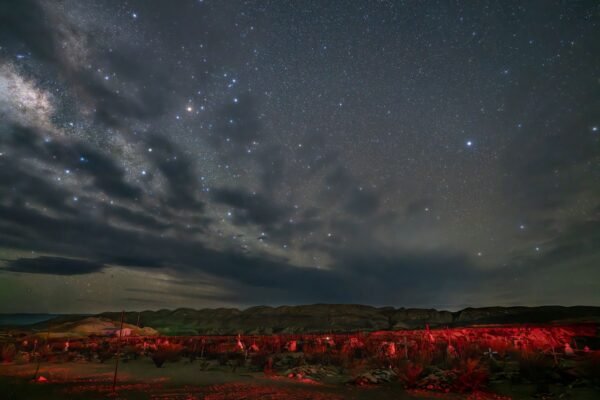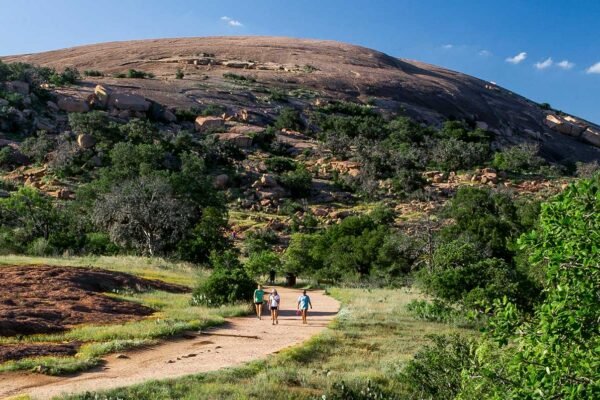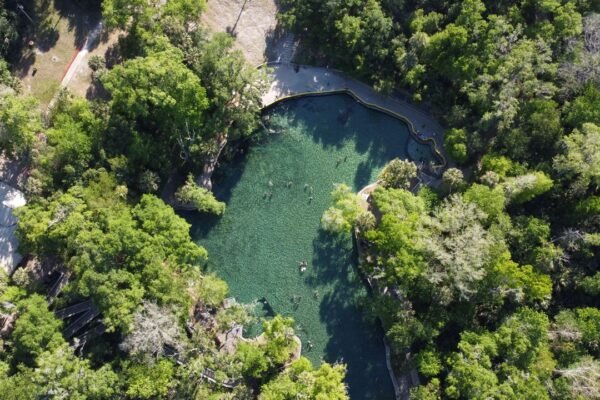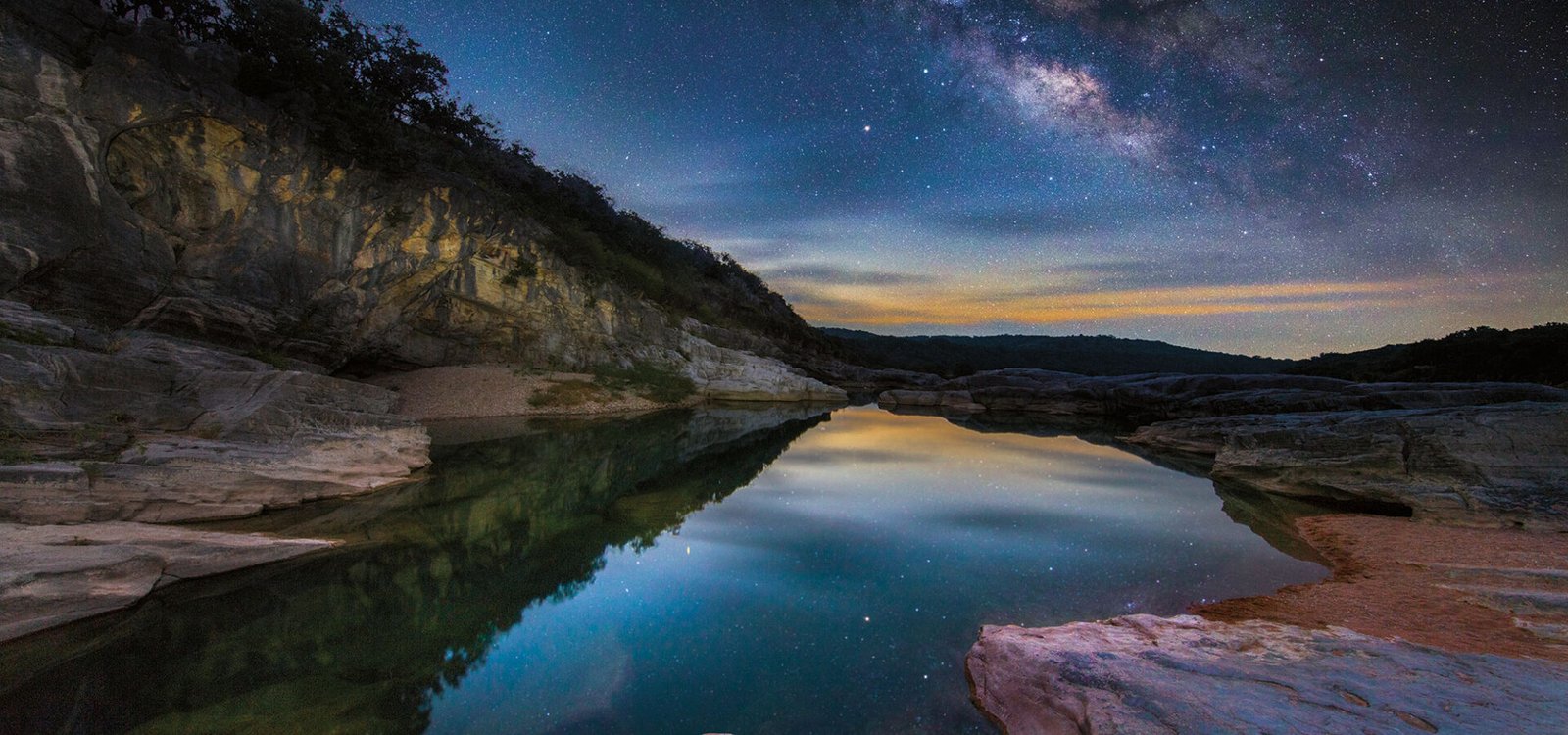
Pedernales Falls is one of the best stargazing destinations in central Texas. Sitting far enough from Austin’s light dome to reveal the Milky Way on clear nights, with wide-open skies and dark prairies, the park draws astronomy clubs and casual sky-watchers alike.
This guide covers the best spots inside the park, when to visit, what to bring, and how to make the most of a night under genuinely dark skies.
Quick Stargazing Facts
- Bortle scale rating: ~Class 3 (rural/dark) — Milky Way clearly visible
- Best months: September – April for clearest skies
- Best moon phase: New moon and crescent
- Best spots: Primitive walk-in campsites, Wolf Mountain trailhead lot
- Star parties: Several per year, hosted with local astronomy clubs
- Camping required: Most stargazing happens from campsites; gates close at 10pm to non-campers
Why Pedernales Falls Is Great for Stargazing
The park sits far enough from Austin (30+ miles) to escape the worst light pollution but close enough to make a quick weekend trip. The terrain helps too — the river canyon and surrounding ridges block ambient light from nearby roads, creating pockets of genuine darkness.
The Hill Country also has surprisingly clear, dry air. Humid Gulf moisture often dissipates by the time it reaches the Edwards Plateau, leaving sharper, steadier skies than you get in coastal Texas.
On a clear, moonless night, you can see:
– The Milky Way as a textured band across the sky
– The Andromeda Galaxy with the naked eye
– 4,000+ stars (vs. ~50 in downtown Austin)
– Meteor trails several times per hour during shower peaks
– Satellites and the International Space Station
Best Stargazing Spots in the Park
Primitive Walk-In Campsites
The walk-in tent sites along the river are the darkest part of the park. Tall ridges block ambient light from the camping loops, and there’s no nearby infrastructure to throw glare. These are the gold standard for serious stargazing.
You’ll need to book one of these sites to use them — they’re not accessible after gate closure at 10pm.
Wolf Mountain Trailhead Lot
The west-side trailhead parking has a wide-open western horizon — great for catching sunset, planet conjunctions, and zodiacal light. Slightly more ambient light than the river sites but easier access.
Open Areas Along the River
If you’re camping at a water/electric site, walk a short distance to the open river bank for darker skies than your campsite likely offers.
Where to Avoid
- Anywhere near the camp store or restroom blocks (sodium lights)
- Loops with active campfires nearby (smoke and glow ruin sky transparency)
- Below tree cover (you want as much sky as possible)
When to Stargaze
Best Months
September – April has the clearest skies. Lower humidity, less haze, and the Milky Way’s brightest portion (toward Sagittarius) is still visible in early fall.
May – August is hazier and more humid, but summer’s warm nights are pleasant for beginners.
Best Moon Phase
The darker the moon, the better the stars. Plan around:
– New moon — best (zero moonlight)
– Crescent moon — great
– First/last quarter — okay, especially if the moon sets early
– Full moon — beautiful in its own way, but most stars are washed out
Check a moon phase calendar before booking your visit.
Time of Night
- Astronomical twilight ends about 90 minutes after sunset — that’s when true dark sky begins
- Best transparency is typically 10pm to 2am
- Pre-dawn (4–5am) has the steadiest seeing for telescope users
Star Parties at Pedernales Falls
The park hosts star party events several times a year, usually in partnership with the Austin Astronomical Society and other clubs.
What to expect at a star party:
– Volunteers bring telescopes (sometimes 20+ instruments)
– Free guided tours of the night sky
– Naked-eye constellation tutorials
– Q&A and beginner-friendly explanations
– Family-appropriate atmosphere
How to find dates:
– Check the Texas State Parks event calendar
– Call the park office at (830) 868-7304
– Follow the park’s social media for announcements
Star parties are usually free with park admission. They draw crowds, so arrive early.
What to Bring for Stargazing
Essentials
- Red flashlight — preserves night vision (most headlamps have a red mode)
- Warm layers — even summer nights cool off in the Hill Country
- Folding chair or reclining camp chair — looking up for hours hurts your neck
- Blanket — for sitting on the ground or lap warmth
- Bug spray — mosquitoes are active at dusk near the river
- Snacks and a thermos of coffee/tea
Nice to Have
- Binoculars — 7×50 or 10×50 are ideal. They reveal far more than naked eye and are easier than a telescope
- Star chart or app — SkyView, Stellarium, or a printed chart
- Camera with tripod — even a phone on a tripod with night mode captures the Milky Way these days
- Wide-angle lens if you have a DSLR (14–24mm range)
Don’t Bring (or Use Sparingly)
- White flashlights — they ruin everyone’s night vision for 20+ minutes
- Phone screens at full brightness — switch to red-shift mode
- Loud music — sound travels in the canyon and other campers will be unhappy
Stargazing Tips for Beginners
- Let your eyes adjust. Full dark adaptation takes 20–30 minutes. Don’t check your phone or a white light during that window.
- Look slightly off-center. Faint objects are easier to see with peripheral vision than direct gaze.
- Start with the easy stuff. Identify the brightest stars, find the Milky Way, locate the Big Dipper. Build from there.
- Use a planetarium app. Stellarium (free) and SkyView are excellent for beginners.
- Join a star party. Even one event teaches you more than reading for hours.
What You Can See by Season
Spring (March – May)
- Leo, Virgo, Boötes constellations
- Galaxy season — the Virgo cluster is overhead
- Bright planets in the evening sky (varies by year)
Summer (June – August)
- The galactic center of the Milky Way is highest in the south
- Sagittarius, Scorpius, Cygnus are prominent
- Perseid meteor shower peaks in mid-August
Fall (September – November)
- Andromeda Galaxy is high overhead
- Orionid meteor shower peaks in October
- Long nights, clearer air
Winter (December – February)
- Orion, Taurus, Gemini, Canis Major
- Geminid meteor shower peaks mid-December (often the year’s best)
- Crystal-clear, cold transparent skies
Photography Tips
The Milky Way is photographable here with surprisingly modest gear:
Phone:
– Use night mode on a tripod or stable surface
– 10–30 second exposure
– Frame with foreground (cypress trees, river rocks)
DSLR/mirrorless:
– ISO 3200–6400
– f/2.8 or wider
– 15–25 second exposure (longer creates star trails)
– Manual focus on a bright star
– Wide-angle lens (14–24mm) for sweeping shots
Best foreground compositions:
– Cypress silhouettes against the Milky Way
– Limestone formations with stars rising
– Tents glowing under the night sky (good summer image)
Star Parties vs. Solo Stargazing
Star parties are best if:
– You’re new to stargazing
– You want to see things through telescopes you don’t own
– You enjoy meeting other enthusiasts
– You’re bringing kids who’d benefit from guided learning
Solo or small-group is best if:
– You want quiet and contemplation
– You’re an experienced observer with your own gear
– You want to do astrophotography without flashlights ruining shots
– You’re combining stargazing with camping
Practical Notes
- You must be camping to stay in the park after 10pm. Day-use visitors are required to leave at gate close.
- Clear skies are not guaranteed. Check the forecast and the Clear Sky Chart for Pedernales Falls before your trip.
- Cell service is unreliable. Download apps and offline content before arriving.
- Bring extra batteries. Cold air drains them faster than you’d expect.
Combining Stargazing with Camping
The ideal Pedernales Falls trip:
- Arrive Friday afternoon, set up camp, enjoy a swim
- Eat dinner at camp, watch sunset
- Begin observing as twilight fades
- Stay up until you’re tired (or until clouds roll in)
- Sleep in, hike Wolf Mountain in the morning
- Repeat night two if conditions allow
A single clear night here is worth the trip. Two is unforgettable.
Pedernales Falls is the closest genuinely dark sky to Austin and a top stargazing site in central Texas. Plan around the moon, dress warmly, and bring patience — the sky does the rest.
Want to know when the next star party is? Contact us — we’ll send you upcoming dates.
This page contains affiliate links. We earn a small commission at no extra cost to you.