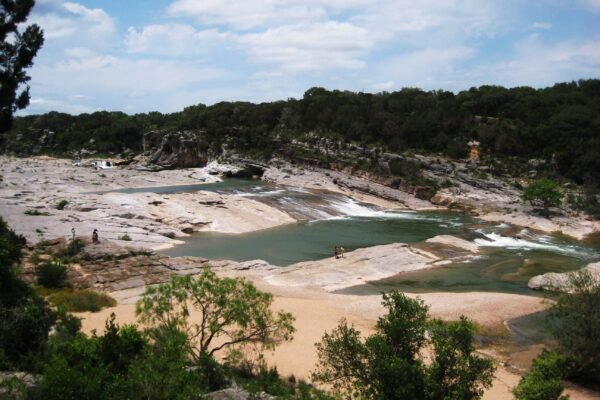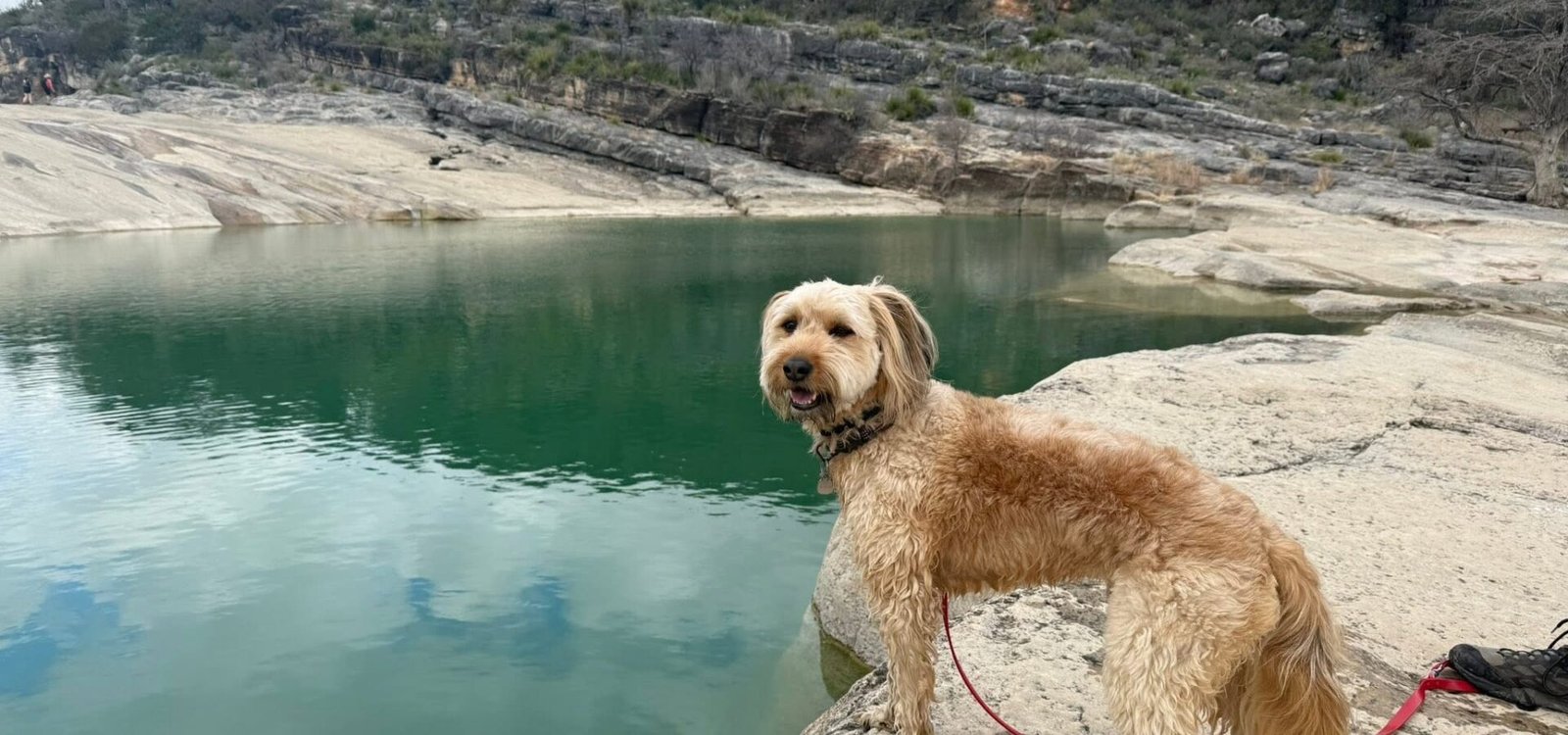
Yes, you can bring your dog to Pedernales Falls State Park — with some important restrictions that catch a lot of visitors off guard. Dogs are welcome at the main campsites and on the trails, but they’re banned from the river, the swimming areas, the primitive camping zone, and all park buildings.
This guide covers exactly where your dog can and can’t go, how to handle the Texas heat, and how to plan a trip that’s genuinely fun for both of you.
The Rules at a Glance
- Leash required everywhere: maximum 6 feet, at all times. Rangers enforce this.
- Dogs allowed: the 69 water/electric campsites, day-use picnic areas, and the trail system.
- Dogs NOT allowed: in the Pedernales River, in the designated swimming area, in the backcountry primitive camping area (Wolf Ridge), or inside any park building.
- Never leave a dog unattended at a campsite or in a vehicle — both against park rules, and in Texas heat, a car becomes lethal in minutes.
- Pick up after your dog. Bring bags; not every trailhead has them.
The river ban is the one that surprises people most. If your dream is a dog splashing in a swimming hole, this park isn’t the place — but there are nearby alternatives, covered below.
Camping With Your Dog
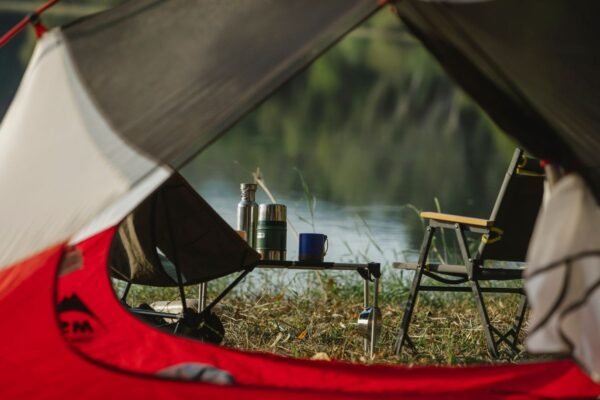
The main campground is the dog-friendly part of the park. Each of the 69 sites has water and electric hookups, a picnic table, and enough space that a leashed dog can settle in comfortably. Restrooms and showers are nearby (humans only, sorry).
Campground tips for dog owners:
- Book a site on the outer edge of the loop for more buffer from neighboring dogs and foot traffic.
- Bring a tie-out stake or cable — the 6-foot leash rule applies at your site too, and a tie-out makes camp life easier while you cook.
- Pack a water bowl and shade plan. Afternoon sun is intense; a spot under the site’s tree cover or a portable shade canopy matters June through September.
- Nighttime wildlife (deer, armadillos, raccoons) will walk near camp and your dog will notice. A short backup leash inside the tent saves 3am surprises.
Important: The primitive hike-in sites do not allow pets at all. If backcountry camping is on your list, that’s a no-dog trip.
The Best Trails to Hike With a Dog
All the park’s main trails allow leashed dogs. Which one fits depends on your dog’s fitness and — more than anything — the temperature.
Twin Falls Trail is the best beginner dog hike: short, mostly shaded, with cypress cover near the river section. Just remember the river itself is off-limits, even for a quick dip.
Wolf Mountain Trail (the roughly 6-mile loop) is the full-day option for fit dogs in cool weather. It’s exposed in long stretches — this is a fall-through-spring hike for dogs, not a summer one. Carry water for both of you; there’s none on the trail.
The shorter interpretive trails near headquarters work well for older dogs or a quick morning leg-stretch before the day heats up.
Full trail details, distances, and difficulty in our hiking guide.
Heat: The Thing That Actually Matters
The biggest risk to dogs at this park isn’t wildlife or terrain — it’s heat. From late May through September:
- Hike at sunrise or after 6pm only. Midday trail temperatures over the exposed limestone can exceed the air temperature significantly.
- Test the ground with your hand. If the rock is too hot to hold your palm on for 5 seconds, it’s burning paw pads.
- Watch for heat stress: heavy panting, drooling, wobbling, or seeking shade and refusing to move. If you see it, stop, shade up, offer water, and cut the hike short.
- Since dogs can’t cool off in the river here, your cooling tools are shade, water, and timing. A soaked cooling bandana helps more than you’d think.
In July and August, honestly, the kindest plan for most dogs is a sunrise walk and a shaded campsite day — or leaving them home with a sitter for that trip.
Where Dogs CAN Swim Nearby
Since the park’s river is off-limits to dogs, here are the workarounds:
- Private glamping and camping properties around Johnson City often have ponds or river access where hosts allow dogs — check individual listings on Hipcamp and similar platforms. Our glamping guide covers the area.
- Some Hill Country swimming spots outside the state park system are dog-friendly — policies change, so verify before driving.
- At your campsite, a collapsible kiddie pool filled from the water spigot is the classic Texas camp-dog move. Cheap, packs flat, and dogs love it.
A Sample Dog-Friendly Day at the Park
- 7:30am — Arrive as gates open (or wake at your campsite). Hike Twin Falls Trail while it’s cool.
- 10am — Water break and shade at the picnic area; humans rotate to the falls overlook (one person waits with the dog — dogs are allowed at the overlook area on leash, but the crowds and heat may not be worth it).
- 12pm–4pm — Shaded campsite time: lunch, naps, kiddie pool.
- 5pm — Evening walk on a short trail as the heat breaks.
- 8pm — Dinner at camp, then stars. Dogs make excellent stargazing companions — see our stargazing guide.
What to Pack for Your Dog
Water bowl and extra water, food and treats, 6-foot leash plus a backup, tie-out cable, waste bags, cooling bandana, paw balm (limestone is abrasive), any medications, a towel, and their bed or blanket for the tent. Vaccination records are smart to have in the car — Texas parks can ask for rabies proof.
Related Reading
Rules current as of July 2026 — confirm on the official TPWD page before your trip, as pet policies can change.
This page contains affiliate links. We earn a small commission at no extra cost to you.