Austin’s light dome washes out all but the brightest stars for miles in every direction — but drive 45 minutes west and the Hill Country still delivers genuinely dark sky. The Milky Way, meteor showers, thousands of stars: all recoverable in an evening, if you pick the right spot and the right night.
Here’s the honest ranking of stargazing spots near Austin, from quick escapes to true dark-sky pilgrimages.
First, the Two Rules That Matter More Than Location
The moon outranks everything. A full moon at the darkest site shows you less than a new moon in a mediocre one. Check the phase before planning; aim within a week of new moon.
West beats east. Austin’s glow spreads, but the Hill Country’s ranch land west of the city goes dark faster than the I-35 corridor. Every spot below is west or southwest for a reason.
1. Pedernales Falls State Park — Best Overnight Sky Near Austin
About an hour west · camp to stay past gate hours
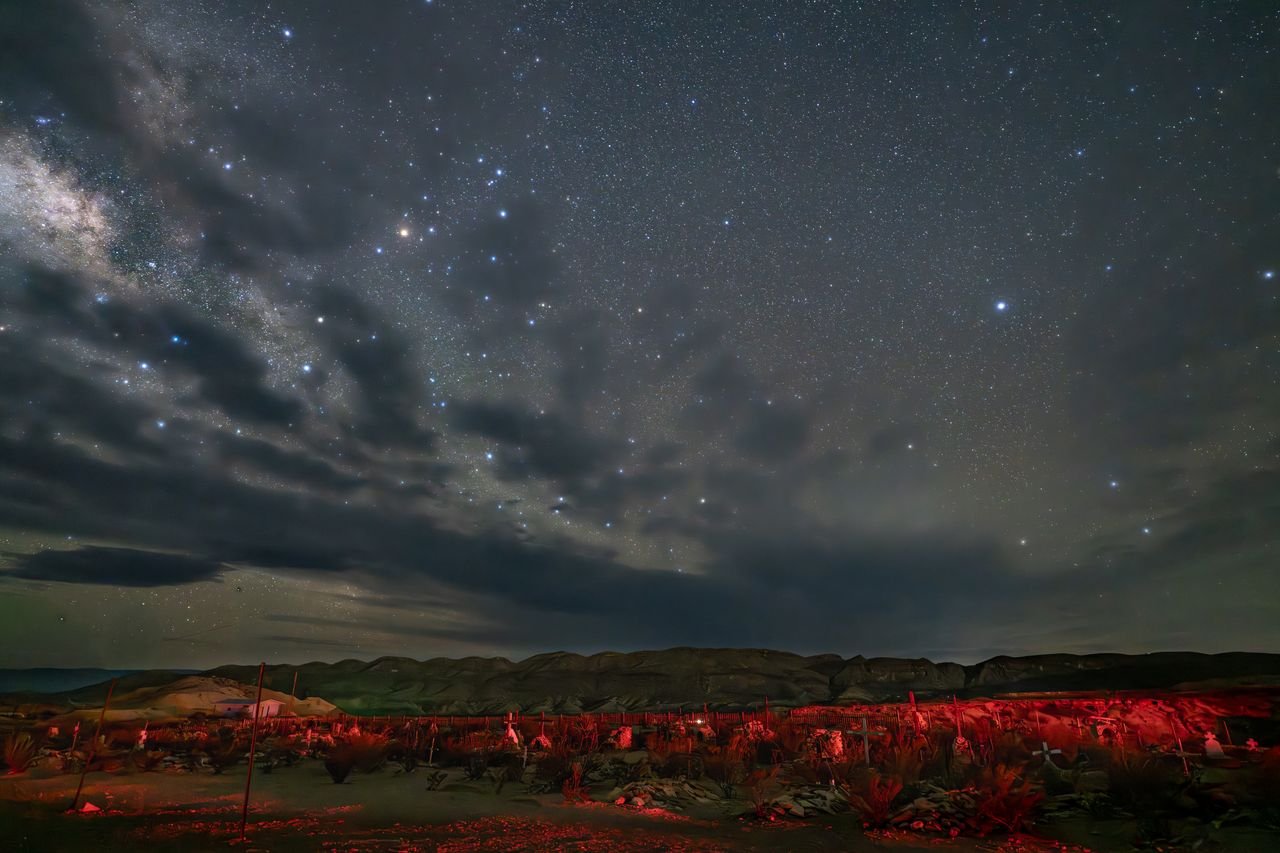
One of the closest places to Austin where the Milky Way is plainly visible on clear moonless nights. The practical advantage over every “drive out and look” option: camping lets you stay for the truly dark hours after 10pm legally and comfortably — day visitors must exit by gate close. The main campground is good; the 2-to-3-mile hike-in Wolf Ridge primitive area is darker still. Full site-by-site sky tactics in our stargazing guide.
Best for: the camp-and-stargaze weekend; first Milky Way photos.
2. Enchanted Rock State Natural Area — The Regional Benchmark
About 2 hrs west · internationally recognized dark skies
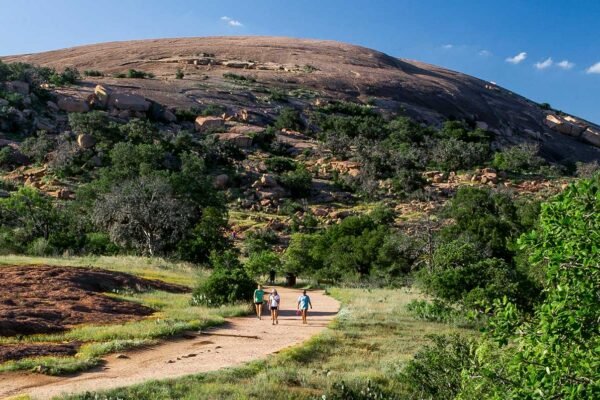
Farther from every city, internationally recognized for sky quality, and the granite dome adds an unbeatable foreground for astrophotography. The constraints: passes sell out, camping is walk-in tent only, and after-hours access requires being a registered camper. When people ask “where’s the best sky within two hours,” this is the standard answer — the details of the trade-off with Pedernales are in our comparison.
Best for: dedicated dark-sky trips, astrophotographers.
3. Dripping Springs & the 290 Corridor — The Quick Fix
30–40 min west · roadside and ranch-event viewing
Dripping Springs holds an International Dark Sky Community designation — remarkable for a town this close to Austin — and the ranch country around it offers the fastest meaningful sky upgrade from the city. There’s no single public overlook; the play is events (area wineries, ranches, and preserves host periodic star parties) or simply pairing an evening out with the darker drive home. Good, not great — but 30 minutes.
Best for: spontaneous “let’s see some stars tonight” evenings.
4. Colorado Bend State Park — The Wild-Sky Weekend
2 hrs northwest
Remote enough that the sky rivals Enchanted Rock with a fraction of the booking pressure. Pair Gorman Falls by day with serious darkness by night. Facilities are rustic; that’s the price and the point.
Best for: uncrowded dark-sky camping.
5. Canyon of the Eagles (Lake Buchanan) — The Observatory Option
90 min northwest
A nature-park resort with an actual observatory and public astronomy programs on the shore of Lake Buchanan — the pick when you want telescopes and guides provided rather than DIY. Check current program schedules before booking a night around it.
Best for: beginners who want the guided version; telescope time without owning one.
What About Inside Austin?
For orbit-and-planets-level viewing, the city still offers occasional public star parties (UT’s observatories and local astronomy clubs host them) — worth it for telescope views of Saturn’s rings, hopeless for the Milky Way. Manage expectations accordingly.
The Playbook, Whatever You Pick
Go within a week of new moon; arrive before full dark and let your eyes adapt 20–30 minutes; use red light only; check the clear-sky forecast, not just clouds (humidity haze kills transparency here). Meteor-shower nights — the Perseids in August, Geminids in December — are the best beginner hooks of the year. The complete how-to, gear list, and Pedernales-specific spots live in our stargazing guide, and the weekend itinerary builds the sky into a full trip.
How we research: compiled from park designations, astronomy-community resources, and aggregated visitor reports. Program schedules and access rules change — verify before you drive.
This page contains affiliate links. We earn a small commission at no extra cost to you.